
John Philip Sousa's name is synonymous with the American march。but his influence stretches far beyond the familiar strains of 'The Stars and Stripes Forever.' Born in 1854 to a Portuguese father and German mother, Sousa grew up in Washington, D.C., surrounded by the sounds of military bands. He could have pursued a career as a violinist—he was a talented one—but instead, at just 13, he enlisted as an apprentice in the U.S. Marine Band. That decision set the course for a life that would redefine wind band music.Sousa's tenure as the leader of the Marine Band (1880–1892) and later his own civilian band (1892–1932) turned him into a household name. His marches, like 'Semper Fidelis' and 'The Washington Post,' became instant hits. What made Sousa's sound distinctive?
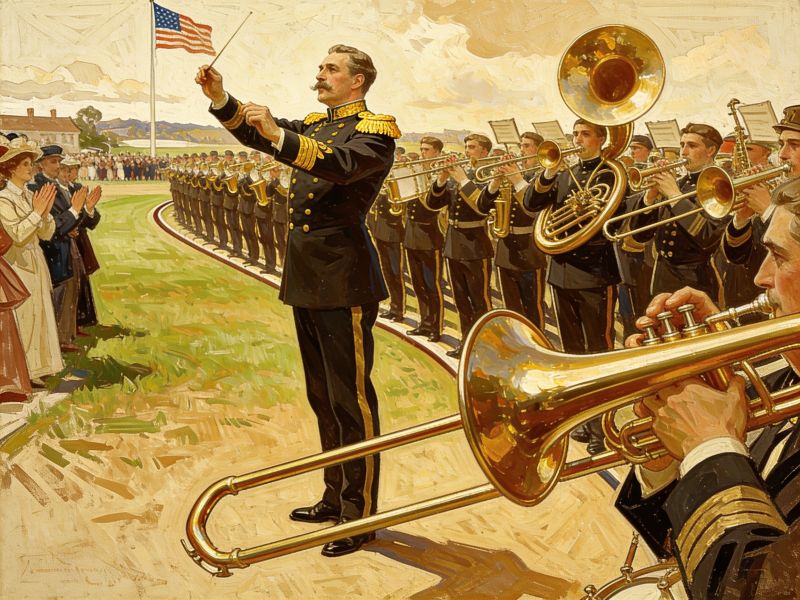
He wrote with a keen ear for instrumentation。balancing brass and woodwinds in a way that felt both powerful and nuanced. He also understood the value of a good hook—his melodies are simple, memorable, and built for repetition. But Sousa wasn't just a composer;he was a showman. His band toured relentlessly, playing over 15,000 concerts worldwide. He demanded precision from his musicians, yet his programs often included light classics and popular tunes, making high-quality music accessible to the masses.The Sousaphone, that iconic wrap-around tuba, bears his name for a reason. Sousa wanted an instrument that would project sound outward in outdoor venues, and he collaborated with instrument makers to develop it. This practical streak extended to his views on recording technology. He famously warned against the 'menace of mechanical music,' fearing that recorded music would kill amateur music-making. Ironically。his own recordings sold millions. That tension—between embracing innovation and preserving tradition—makes Sousa a fascinating figure. He wasn't a Luddite;he simply valued the human element in music.Beyond the marches, Sousa composed operettas。suites, and songs, though few remember them today. His legacy is the march, and he elevated it from simple military fare to a sophisticated art form. He also championed copyright reform and advocated for musicians' rights, serving as a founding member of ASCAP. In an era when band music was often dismissed as mere entertainment, Sousa insisted on artistic integrity. His insistence on playing encores, his white gloves, and his dramatic conducting style—all contributed to a persona that made band music respectable.
Today, Sousa's marches remain staples of concert band repertoire. But his broader impact—on music education, on the role of the conductor as a public figure。on the very idea of a professional wind band—is often overlooked. Walk into any school band room, and you'll likely find a Sousa march on the shelf. That's not nostalgia;
it's a testament to music that works. Sousa understood that accessibility and quality aren't opposites. He proved it, one march at a time.